Wistron's $9B India Plant Acquired by Tata for $125M
**Preface**
In the tide of economic globalization, companies from various countries are stepping out of their national borders in search of broader markets and development opportunities.
As a well-known enterprise, Wistron's investment of 90 billion in an Indian factory was undoubtedly a vote of confidence in the potential of the Indian market. However, the eventual outcome is lamentable.
This company, which once held an important position in India's electronics manufacturing industry, why did it suddenly decide to sell its heavily invested factory? Are there special challenges hidden behind the Indian market?
**All That Glitters Is Not Gold?**
The phrase "fatten up and then slaughter" aptly describes Wistron's experience in India. Just a few days ago, a shocking news to the industry came: Wistron sold its 90 billion Indian factory to the Indian Tata Group for $125 million.
To be honest, this price is astonishingly low, considering the significant investment Wistron made in India.
Since entering the Indian market in 2007, they have accumulated investments of about 90 billion rupees, which is equivalent to 1.1 billion US dollars.
When calculated this way, the selling price is less than one-ninth of the investment amount. No matter how you look at it, this deal is a significant loss.So the question arises, why would Wistron do this? Has the Indian market lost its appeal?
On the contrary, the Indian market is quite attractive. As the world's second-largest smartphone market, India's annual mobile phone sales are around 300 million units. With such a large piece of the pie, who wouldn't want to take a bite?
Moreover, the Indian government is vigorously promoting the "Make in India" initiative, offering numerous preferential policies to foreign enterprises. The low cost of labor, huge market potential, and government support make it a paradise for investors!
However, in a market that seems full of opportunities, Wistron has stumbled badly, which inevitably raises doubts: Is the Indian market really as good as it appears on the surface?
In fact, the Indian market is like a huge labyrinth. On the surface, it seems full of opportunities, but once you're in, you'll find that there are far more pitfalls than you imagined.
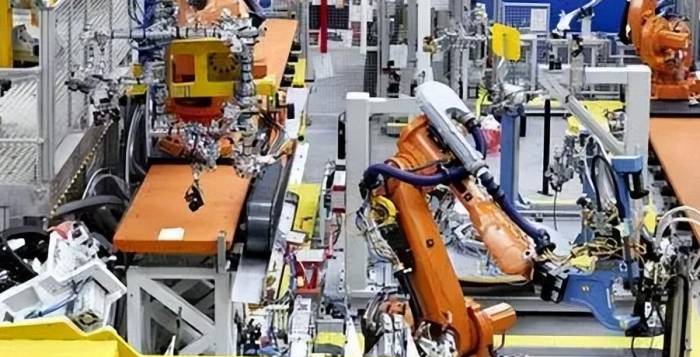
Firstly, there is the issue of infrastructure. Although the Indian government has been working hard to improve it, problems such as unstable electricity supply and low transportation efficiency are still widespread.
These may seem like small issues, but they can significantly reduce production efficiency...
Secondly, there is the issue of labor force. India does have a large number of cheap laborers, but skilled workers are relatively scarce.
Moreover, India's labor laws are complex, and the power of trade unions is strong, all of which increase the management costs and risks for businesses.
Lastly, there is the policy environment. India's policies often change, sometimes even with the change of the day, and this uncertainty is a nightmare for the manufacturing industry that requires long-term planning.There are also cultural differences. The business culture and work methods in India are very different from those in China or Western countries. If these differences are not handled well, they can easily lead to low management efficiency and even conflicts.
Wistron's experience in India is actually a concentrated reflection of these issues. They were once very successful, establishing a large factory in Karnataka that covers more than 200,000 square meters and has 8 Apple mobile phone production lines. The number of employees increased from a few thousand at the beginning to nearly ten thousand, once accounting for 75% of the market share in India's electronics manufacturing industry.
However, the good times didn't last long. In December 2020, a serious labor dispute occurred at Wistron's factory in India, forcing the factory to shut down.
This incident not only caused huge economic losses but also severely affected Wistron's reputation and business development in India.
【Ten years of sharpening a sword, cutting through metal and armor in one morning】
In 2007, Wistron confidently stepped onto the "new continent" of India. At that time, everyone thought India was the next China, with demographic dividends and market potential, making it the best choice to replicate China's miracle.
Wistron didn't come to play. They made a big move at the beginning, investing heavily in Karnataka to build a large factory covering more than 200,000 square meters, which is equivalent to the size of 28 football fields!
Not only that, Wistron also set up 8 Apple mobile phone production lines. This is a world-class brand. The fact that Wistron can get Apple's orders shows its strength.
With the expansion of the business, Wistron's employee team also expanded from a few thousand at the beginning to nearly ten thousand, with a growth rate that is faster than taking an expander.
At its peak, Wistron accounted for 75% of the market share in India's electronics manufacturing industry. This number is breathtaking.It's important to understand that in the business world, capturing 30% of the market is already being the dominant player, and 75% is practically a monopoly!
However, this prosperity didn't last long. As the saying goes, "the taller the tree, the more wind it attracts." The rapid expansion of Wistron also sowed the seeds of hidden dangers.
The number of employees surged, but the management level couldn't keep up. It was like a primary school teacher suddenly having to manage university students, feeling overwhelmed.
The management style of Chinese companies also didn't fit well in India. The working habits and thinking patterns of Indian employees are very different from those in China. If these differences are not handled well, it's easy to trigger conflicts.
In addition, India's complex labor laws and strong union forces made Wistron's management feel like they were walking on thin ice every day.
Finally, in December 2020, a serious labor dispute broke out at Wistron's factory in India. The workers were dissatisfied with the working conditions and pay, and in anger, they smashed the factory. This incident is said to have caused a loss of up to $60 million.
What's more deadly is that this incident directly led to the factory being forced to shut down. A large factory that had invested 90 billion rupees suddenly stopped, and the loss was simply heartbreaking.
But the real blow was yet to come. This incident severely affected Wistron's reputation and business development in India. Not only did they fail to get new orders, but even their original customers began to waver.
Wistron's dream in India came to an abrupt end, from glory to difficulty, in just a few years. This speed might even surprise Wistron itself.
But the business world is like a battlefield. If you fail, you have to admit it. In the end, Wistron had to make a difficult decision: to sell its Indian factory to the Tata Group for a price of $125 million.The price is indeed very low, but for a factory that is losing money every day, being able to sell is already a stroke of luck amidst misfortune.
【The Ambition of a Local Giant】
Established in 1868, the Tata Group has stood firm in India for a century and a half, with its reach extending to every corner of the Indian economy, from steel to automobiles, from software to tea. So why would such an established conglomerate take the risk of taking over the "hot potato" that is Wistron? The answer is simple: they see an opportunity.
The Tata Group has been looking for an opportunity to enter the electronics manufacturing industry. In the digital age, not venturing into electronics manufacturing would mean missing out on the entire era. Although Wistron's factory has encountered problems, the hardware facilities remain, including 8 Apple iPhone production lines, which is no small matter. For Tata, this is a ready-made "golden opportunity."
Moreover, as a local Indian enterprise, Tata undoubtedly has an advantage over foreign companies in handling labor relations and dealing with policy changes. They are confident that they can revitalize this factory.
However, Tata's ambitions do not stop there. Their goal is to establish a world-class electronics manufacturing base in India. The Indian government is currently vigorously promoting the "Make in India" initiative. What is the goal of this initiative? It is to turn India into a global manufacturing hub, and electronics manufacturing is undoubtedly a top priority.
The Tata Group has clearly seized this opportunity. They know that whoever can take the lead in this field will be able to dominate the future Indian economy.And don't forget, India is the second-largest smartphone market globally, with annual sales of 300 million units—this is a huge piece of the pie! If Tata can successfully enter this market, it would be a highly profitable venture. Therefore, for Tata, acquiring the Wistron factory for $125 million is like picking up a great bargain.
However, Tata's ambitions don't stop there. It is said that they plan to invest billions of dollars in the coming years to vigorously develop the electronics manufacturing industry. Tata's goal is clear: they aim to become India's largest iPhone contract manufacturer within five years, surpassing Foxconn! Foxconn is the world's largest electronics contract manufacturer and holds a significant market share in India. Tata is poised to challenge the "industry leader."
But Tata has the confidence to do so. As a local Indian company, they have government support, local advantages, substantial financial strength, and most importantly, they have an in-depth understanding of the Indian market.
Tata's ambition also reflects the strategic intentions of the Indian government, which hopes to cultivate local electronics manufacturing giants and reduce dependence on foreign companies. Therefore, Tata's acquisition can be seen as killing two birds with one stone, meeting its own development needs and aligning with national strategy. This deal seems like a win-win situation.
【The Future of "Make in India"】
The future of "Make in India" is a vast topic. Some argue that it is the next world factory, while others believe it is far from being qualified. So, what is the truth?India now has a population of over 1.3 billion, with a high proportion of young people, which means a large workforce and a huge consumer market.
The Indian government has also launched the "Make in India" initiative, offering many preferential policies to foreign investors. Investing in certain industries can enjoy tax reductions.
The labor cost in India is also lower than in China, which is a great temptation for labor-intensive industries.
However, everything has two sides. Indian manufacturing is also facing many challenges.
The first is the infrastructure issue. Although the Indian government has been working hard to improve it, there is still a big gap compared with developed countries.
Unstable power supply and low transportation efficiency will affect production efficiency.
The second is the quality of the workforce. Although India has a large workforce, highly skilled workers are relatively scarce, and there is still a big gap between India's education system and actual needs.
Next is the policy environment. Indian policies often change, and sometimes even change overnight. This uncertainty is a big trouble for corporate long-term planning.
India's business culture and work methods are also very different from other countries. If this difference is not handled well, it can easily lead to low management efficiency and even conflicts.
In the final analysis, the future of Indian manufacturing depends on whether India itself can seize opportunities and overcome challenges.Tata Group's acquisition of the Wistron factory can be considered a good touchstone. If Tata can successfully revitalize this factory, it will undoubtedly give a strong boost to India's manufacturing industry.
However, "one swallow does not make a spring". For India to truly become the world's factory, there is still a long way to go.
But we should not be too pessimistic. After all, Rome was not built in a day. China took decades to become the world's factory, and India also needs time.
What's important is that India has embarked on this path, and from the government to enterprises, they have shown a strong determination.
So we have reason to believe that as long as India can continue to work hard and overcome challenges, the future "Made in India" will definitely have a place on the global stage.
【Conclusion】
Wistron's withdrawal and Tata's takeover are not just the story of two companies, but also a microcosm of the development of India's manufacturing industry. It shows the huge potential of the Indian market and exposes many challenges.
For companies that want to get a share of the Indian market, this is undoubtedly a valuable case. It tells us that entering the Indian market requires full preparation and long-term patience.
At the same time, for India, how to balance the relationship between the development of local enterprises and attracting foreign investment, how to improve the business environment, and how to improve the competitiveness of manufacturing are all directions that need to continue to work hard in the future.
In today's constantly changing global economic pattern, every move of India, the world's fifth-largest economy, may have a profound impact on the global industrial chain.Please provide the text you would like me to translate into English.


