Gold Jewelry Sales Dip, Investment Interest Remains Strong
In the first three quarters of this year, domestic gold prices have continuously set historical highs, with a cumulative increase of over 24%. Recently, reporters visited markets in Beijing, Shanghai, Shenzhen, and other places and found that in the market environment with high gold prices, consumption has been somewhat restrained, while investment enthusiasm remains unabated. The ups and downs of the market are testing the patience of participants.
High gold prices suppress gold jewelry consumption
Due to factors such as the intensification of geopolitical turmoil, international gold prices recently approached $2,700 per ounce, and the price of AU99.99 on the Shanghai Gold Exchange, priced in yuan, also broke through the 600 yuan per gram mark. In the terminal market, the quotes for pure gold jewelry in stores such as Chow Tai Fook and Lao Feng Xiang have reached more than 760 yuan per gram since October.
"During the National Day holiday, although there were different degrees of 'gram reduction discounts' in gold shops, it still cost about 700 yuan per gram. Some with larger discounts have very average design styles." Mr. Xiao, a white-collar worker in Shanghai who plans to buy gold jewelry for his family, exclaimed that the gold price has risen too quickly. "In 2023, the gold jewelry quote was mostly less than 600 yuan per gram for most of the time. I hope to see it drop and then take a look."
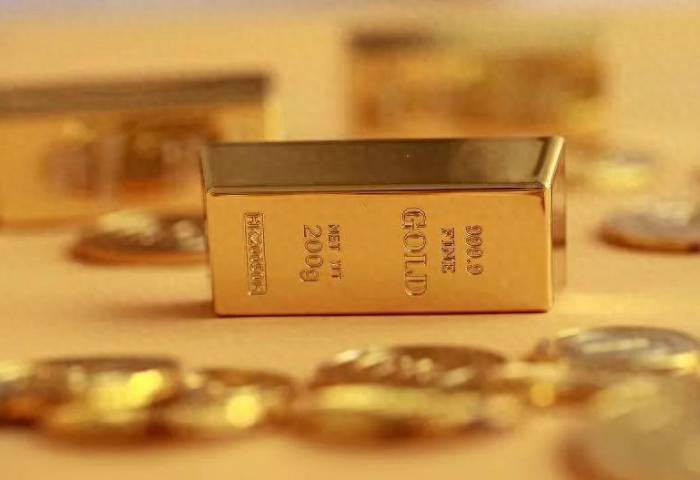
"Faced with the gold market that keeps setting new price highs, consumer wait-and-see mentality has increased," Cheng Xi, a sales manager at a gold shop in Shanghai, told reporters. "There are many customers entering the store, but the number of buyers has not increased significantly. Products with fixed prices and small weights, such as earrings and lucky beads, have better sales, and investment gold bars sell better than gold jewelry."
The predicament of retailers can also be seen from the financial reports of some large jewelry companies. Data released by Chow Tai Fook Jewelry Group shows that the group's retail sales in the Chinese mainland market decreased by 18.6% year-on-year in the second quarter, and 91 stores were closed. In the first half of this year, Chow Sang Sang's turnover decreased by 13% year-on-year, and net profit attributable to the parent company fell by 36% year-on-year.
In Shenzhen's Shuibei market, one of China's main gold and jewelry distribution centers, Mr. Li, who is engaged in the gold wholesale business, said that during the National Day holiday, the sales of gold jewelry in his store decreased by 15% year-on-year according to the weight. Compared with jewelry and diamond jewelry, the homogenization competition of gold jewelry is more intense, leading to an increase in industry "involution," and the profit in the wholesale link is very thin.
The gold outflow from the Shanghai Gold Exchange is an important indicator reflecting the consumption status of the domestic gold market. From January to September this year, the gold outflow from the Shanghai Gold Exchange was 1,127.76 tons, a decrease of about 11.14% year-on-year.
The suppressive effect of high gold prices on domestic demand is also reflected in the price difference between domestic and international gold prices. As China is a gold-importing country, domestic gold prices have been higher than the international market for a long time. However, since mid-August, the gold price priced in yuan has been at a rare discount compared to the international market. According to calculations, on October 10, the domestic gold price was still $31.6 per ounce lower than the international gold price, equivalent to 7.19 yuan per gram.
The business of replacement and repurchase is heating up.Journalists have learned that the high gold prices have heated up the gold shops' gold buyback and exchange for new business, and some "gold-forging shops" that use gold bars to make gold jewelry are also thriving.
In a China Gold store in Shanghai, Mr. Wang, who plans to buy back gold bars, told reporters that some gold bars he bought at the end of 2018 have already doubled in price compared to the purchase price, and he is planning to cash out and invest in other markets.
Liu Bao, the manager of the gold investment department at Guohua Jewelry in Beijing, said that after the "Eleven" long holiday, the daily gold buyback volume is 1 to 2 kilograms, more than double that of the same period last year.
Cao Shuping, the person in charge of a gold jewelry store in Shanghai, told reporters that high gold prices have driven the exchange for new business of gold jewelry. For consumers, as long as they pay the price difference, they can exchange for new jewelry. "Through this exchange for new method, the price is cost-effective, and the use effect is not much different from buying new."
With high gold prices, new consumption methods such as using gold bars to make gold jewelry are becoming increasingly popular. Recently, Ms. Kang, a white-collar worker in Beijing, ordered a new style of bamboo-shaped bracelet from a "gold-forging shop" online store in Jiangxi after selecting the style, and sent a 30-gram investment gold bar from her home. After 14 days, she received a brand-new bamboo-shaped bracelet. "The processing fee and round-trip shipping fee cost a total of 230 yuan. Compared with buying a finished bracelet from a big brand, making a gold bracelet with a gold bar can save a lot of processing fees."
Under high gold prices, the gold jewelry market is undergoing a comprehensive reshaping of brands, channels, and markets. "High gold prices have to some extent suppressed consumers' desire to buy, but they have also forced companies to continuously innovate to provide consumers with more novel and interesting products. Our products co-launched with the Dunhuang Museum integrate fine gold craftsmanship and intangible cultural heritage skills, inlays and other elements, and have achieved good sales performance," said Sun Zhongying, the brand person in charge of Shandong Zhaoyin Silver Tower Co., Ltd.
Consumption investment needs to be rational.
Although the consumption of physical gold is relatively low, as a risk-avoiding asset, many investors are optimistic about the long-term prospects of the gold market. Data released by the World Gold Council shows that by the end of September, global gold ETFs have achieved net inflows for five consecutive months. In September alone, the gold held by global gold ETFs increased by 18.4 tons.
"Long-term gold investors are not actually sensitive to prices," Cheng Wei, a "gold hider," told reporters that he buys gold bars every year. On the one hand, because gold has a low correlation with stocks and other assets, most of the time they do not fluctuate in the same direction, so it can smooth the returns of the entire asset portfolio; on the other hand, in the long run, gold prices are also steadily rising. "According to authoritative institutions, the annualized return rate of gold in the past 10 years is about 8.3%, indicating that gold itself is a long-term investment product," he said.
"The rise of risk aversion and a relatively loose monetary environment has made investors optimistic about the prospects of gold. However, participants entering the market should still choose investment and consumption methods suitable for themselves, and avoid falling into a passive position by believing in high returns," said Jiang Shu, the chief analyst of the gold circle at Shanghai Xirang Industrial Co., Ltd.


