Tesla Loses $470B Overnight, Stock Dives Over 8%
**Preface**
Tesla, a titan in the electric vehicle industry, has recently been embroiled in a series of controversies. On one hand, it has the ambitious Robotaxi initiative, while on the other, it faces a staggering loss in market value. Musk's "futurism" seems to be undergoing a severe test of reality...
In this game of technology and capital, can Tesla continue to lead the industry trend? Do investors still have confidence in this once highly sought-after electric vehicle company?
**Are Investors Losing Faith in Tesla?**
October 2024 was destined to be an extraordinary month for Tesla. The day after the Robotaxi launch event, Tesla's stock price plummeted by more than 10%, and its market value evaporated by over 470 billion yuan overnight.
This astonishing figure inevitably recalls the painful memories of the internet bubble era. What exactly led to such a massive sell-off of Tesla shares by investors?
On the surface, it appears that the Robotaxi launch event failed to meet investors' expectations. The "revolutionary" product touted by Musk lacks a concrete timeline for implementation and a clear profit model in reality.
But could just one launch event lead to such a huge loss in market value? Clearly, the issue goes far beyond that.In fact, Tesla's recent performance has also disappointed investors, with the third quarter's deliveries falling short of expectations and a noticeable slowdown in growth rate. This is undoubtedly a dangerous signal for a company that has always been known for its rapid growth. At the same time, global economic uncertainty is increasing. Against this backdrop, investors have become more cautious about high-valued technology stocks. As one of the representatives of technology stocks, Tesla naturally cannot escape the impact of this trend.
However, it is somewhat far-fetched to attribute Tesla's market value decline solely to external factors. In fact, some internal issues of the company have also begun to emerge. First, the competition is intensifying. As traditional car companies enter the electric vehicle market one after another, coupled with the rise of emerging electric vehicle companies, Tesla's market position is facing unprecedented challenges. In the Chinese market, BYD has surpassed Tesla to become the world's largest electric vehicle manufacturer. Even in Europe, traditional car companies such as Volkswagen and BMW are catching up rapidly.
Secondly, the speed of product innovation. Although Tesla has always been known for technological innovation, the pace of new product launches in recent years seems to have slowed down. Apart from the Cybertruck, Tesla has not launched a truly new model for a long time.
Furthermore, Musk's diversified business layout has also caused some investors to worry. From acquiring Twitter to developing SpaceX, Musk seems to be diverting more and more energy to businesses outside of Tesla.【The Gap Between Musk's Ambitions and Reality】
Amidst the gloom of plummeting market value, Musk remains as ambitious as ever, and Tesla held a much-anticipated Robotaxi launch event.
This event was dubbed by Musk as "the most important product launch in Tesla's history," indicating his high expectations for the Robotaxi.
But as the spotlight fades, the real test is just beginning…
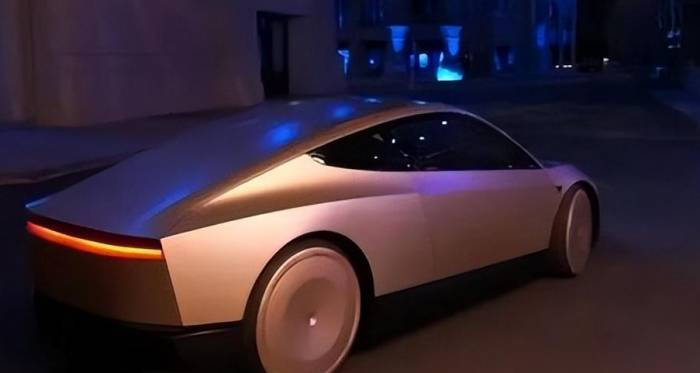
As the name suggests, Robotaxi is an autonomous driving taxi. Tesla showcased two concept models: Cybercab and Robovan.
The Cybercab continues the futuristic design style of the Cybertruck, with sharp edges and a strong sense of science fiction.
The Robovan, on the other hand, resembles a mobile small living room, emphasizing comfort and space utilization.
Musk confidently declared that the Robotaxi would completely change the way people travel. He predicted that by 2030, the Robotaxi service could become Tesla's largest source of profit, even surpassing car sales.
This is undoubtedly an exciting prospect, but there is often an insurmountable gap from concept to reality.
Although Tesla has accumulated a wealth of experience in the field of autonomous driving, achieving fully autonomous driving still faces many technical challenges. From perception systems to decision-making algorithms, every link requires near-perfect performance.At present, most countries and regions around the world do not have a complete legal framework for autonomous driving. How to ensure the safety of Robotaxis and how to handle the liability for potential accidents are all pressing issues that need to be resolved.
The large-scale application of Robotaxis also requires support from supporting infrastructure such as charging networks and communication systems. This not only requires a large amount of investment but also extensive cooperation with governments and other companies.
Finally and most importantly, is the acceptance of the public. Are people willing to entrust their safety entirely to a machine? This requires time to build trust.
Faced with these challenges, Musk is very confident. He said that Tesla's full self-driving system has traveled billions of miles and accumulated a large amount of data.
He believes that with the continuous advancement of technology, Robotaxis will eventually become a reality.
However, investors seem not to buy it. They are more concerned about when this grand plan can be implemented and how to make a profit. Unfortunately, Musk did not provide a clear timetable.
This ambiguity undoubtedly intensifies market unease, and some analysts begin to question whether Robotaxis are just another "pie in the sky" for Musk? Can it really bring considerable profits to Tesla?
【Global Competitive Landscape】
In the seemingly distant yet imminent future battlefield of autonomous driving, Tesla is far from being the only protagonist. From tech giants to traditional car companies, from emerging startups to veteran component suppliers, all heroes are gearing up on this track.
In the United States, Waymo, a subsidiary of Google, is undoubtedly one of Tesla's strongest competitors.As early as 2009, Google had already initiated its autonomous driving project, even before Tesla.
Today, Waymo has launched autonomous taxi services in several cities including Phoenix, although the scale is still small, it has accumulated valuable practical experience.
Cruise, under General Motors, is also not to be outdone. Despite recently pausing services due to safety concerns, its technical strength should not be underestimated.
General Motors' robust manufacturing capabilities, combined with Silicon Valley's innovative DNA, make Cruise a formidable competitor.
In China, Baidu's Apollo program is equally noteworthy. As one of China's largest internet companies, Baidu has unique advantages in artificial intelligence and big data.
Its autonomous taxi services have been trialed in multiple cities and have received strong government support.
Traditional automakers are also catching up, with companies like Volkswagen, Toyota, and Mercedes-Benz investing significant resources in the development of autonomous driving technology.
Although they started later, their profound experience in car manufacturing and vast user base make them equally formidable in this competition.
Faced with such fierce competition, Tesla's onboard systems collect massive amounts of real-road data every day, which is crucial for training and optimizing autonomous driving algorithms.
To date, Tesla's data volume far exceeds that of other competitors.From chip design to software development, from vehicle manufacturing to sales services, Tesla has almost mastered the entire industry chain.
This model allows Tesla to iterate products more quickly and respond more flexibly to market changes.
【Tesla's Future Layout】
In the fierce market competition, Tesla knows that only continuous innovation can maintain a leading position. In addition to the highly watched autopilot technology, Tesla has also made forward-looking layouts in multiple fields.
As the core of electric vehicles, battery performance directly determines the driving range and charging speed of vehicles. Tesla has been committed to improving the energy density and life of batteries while reducing costs.
In 2020, Tesla launched the 4680 battery, claiming that it can increase the driving range by 16% and reduce costs by 14%. Although the mass production progress is not as expected, this is undoubtedly an important technological breakthrough.
Tesla is not only a car company but also an energy company. Through products such as solar roofs and Powerwall home batteries, Tesla is building a complete clean energy ecosystem.
This can not only provide clean electricity for electric vehicles but also help users achieve energy self-sufficiency.
Tesla is developing a supercomputer called Dojo, specifically for processing the massive amount of data required for autopilot. Musk even claims that Dojo may become the world's most powerful AI training computer.
This will not only enhance Tesla's autopilot capabilities but may also open up new business areas for the company.In 2021, Tesla unveiled the prototype of its humanoid robot Optimus. Although its performance was mediocre at the time, Musk firmly believes that the potential of the future robotics market may surpass that of the automotive market.
These technological innovations not only reflect Tesla's foresight but also demonstrate the company's strategic layout.
Tesla is gradually transforming from a pure automobile manufacturer into a comprehensive technology company. This transformation can not only broaden the company's revenue sources but also enhance its risk resistance.
[Conclusion]
Tesla's future path is destined to be full of challenges and opportunities. From the plunge in market value to the ambition of Robotaxi, from the global competitive landscape to the technological innovation roadmap, Tesla is facing unprecedented tests.
But it is precisely these challenges that highlight Tesla's uniqueness.
Musk's "futurism" may sometimes seem too radical, but it is this spirit of daring to think and act that drives Tesla to keep moving forward.
In this rapidly changing era, only continuous innovation can ensure an invincible position...


